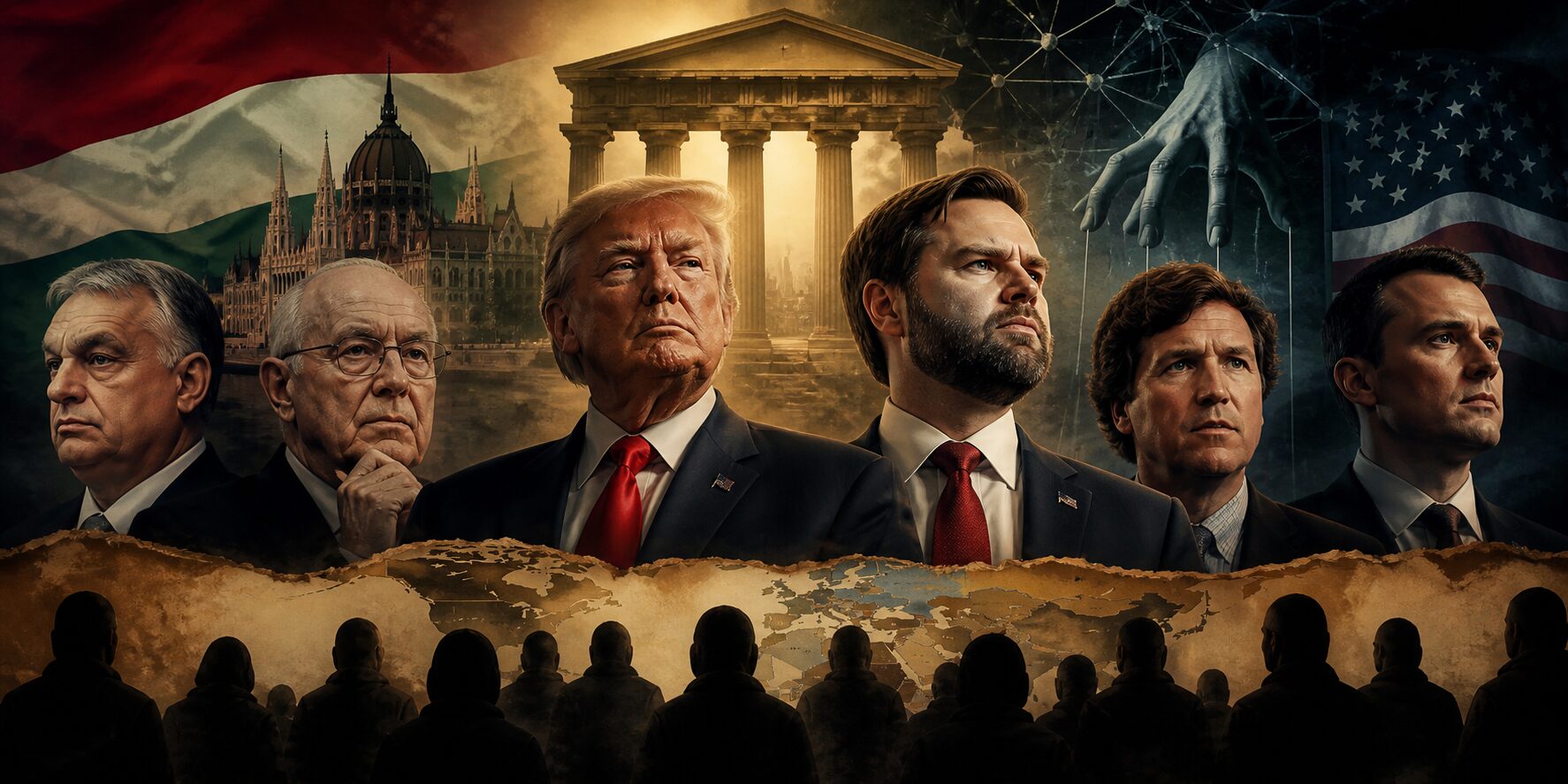
by Joao Lemos Esteves

1. Introduction
The influence of the defeated Hungarian Prime Minister Viktor Orban on the United States democratic process has intensified in recent years. The architects behind Orban’s prolonged authoritarian governance in Hungary have increasingly succeeded in shaping the perspectives of individuals responsible for setting the tone of the Trump 2.0 administration. The favorable reception of Balázs Orban’s work, one of the principal ideologues of Viktor Orban’s political system, within influential MAGA circles underscores the extent of the Hungarian government’s growing intellectual and political influence over the Trump 2.0 administration.
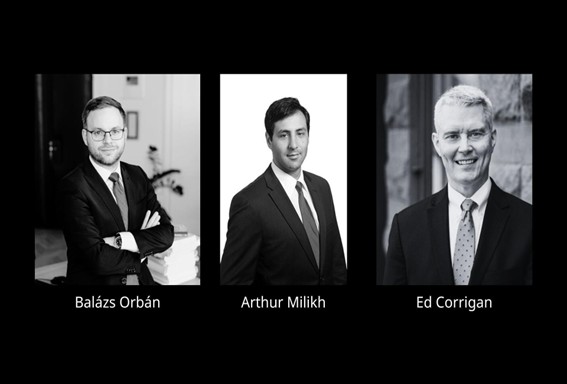
Orban’s book was presented by Arthur Milikh and Ed Corrigan.
Milikh serves as the Executive Director of Claremont’s Center for the American Way of Life, where his work centers on American traditional thought, the preservation of the traditional family, and the defense of freedom of speech. He previously held a position with the House Armed Services Committee and has worked as a political campaign consultant for several Republican candidates.
His writings are regularly featured in the Claremont Review of Books, Law & Liberty, and American Greatness. A former member of The Heritage Foundation, Arthur Milikh also served as a Visiting Fellow at Viktor Orban’s Danube Institute in Budapest, Hungary, a role he held until the 2024 U.S. presidential election.

Ed Corrigan is a prominent figure within the American ultra-conservative movement, having worked alongside Jim DeMint, the former Senator from South Carolina and former President of the Heritage Foundation, as well as Jeff Sessions, who served as the first Attorney General during the first Trump administration. Corrigan was also a speaker at CPAC Hungary in Budapest in 2025, a platform utilized by Viktor Orban to advance his government’s alignment with Russia and China, as well as its broader authoritarian orientation.
2. The anti-NATO narratives in the US: Viktor Orban, the LaRouche movement, Tucker Carlson
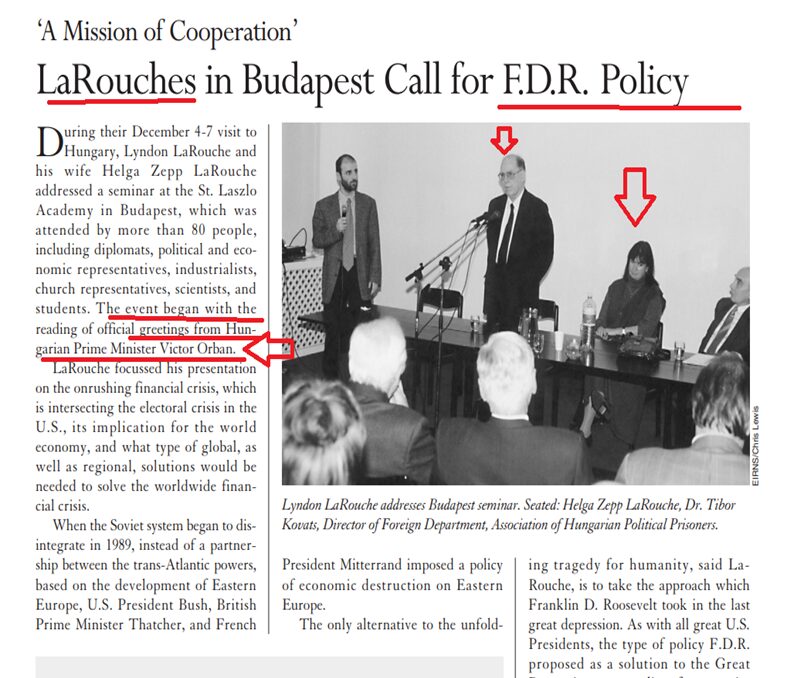
A consistent ally of Viktor Orban in both the United States and Europe has been the LaRouche Foundation. As early as 2000, representatives of the LaRouche movement were invited as special guests by Prime Minister Viktor Orban to participate in a seminar organized by the St. Laszlo Academy in Budapest, entitled “Mission to Cooperation.”
Fidelio, a magazine published by the Schiller Institute, which is affiliated with the LaRouche movement, noted in its Winter 2000 edition (Volume 9, No. 4):
“During their December 4-7 visit to Hungary, Lyndon LaRouche and his wife Helga Zepp LaRouche addressed a seminar at the St. Laszlo Academy in Budapest, which was attended by more than 80 people, including diplomats, political and economic representatives, industrialists, church representatives, scientists, and students. The event began with the reading of official greetings from Hungarian Prime Minister Victor Orban. LaRouche focussed his presentation on the onrushing financial crisis, which is intersecting the electoral crisis in the U.S., its implication for the world economy, and what type of global, as well as regional, solutions would be needed to solve the worldwide financial crisis. When the Soviet system began to disintegrate in 1989, instead of a partnership between the trans-Atlantic powers, based on the development of Eastern Europe, U.S. President Bush, British Prime Minister Thatcher, and French President Mitterrand imposed a policy of economic destruction on Eastern Europe. The only alternative to the unfolding tragedy for humanity, said LaRouche, is to take the approach which Franklin D. Roosevelt took in the last great depression. As with all great U.S. Presidents, the type of policy F.D.R. proposed as a solution to the Great Depression, was a policy of community of principle among sovereign nation states, dedicated to the Pauline principle of agape”¯.
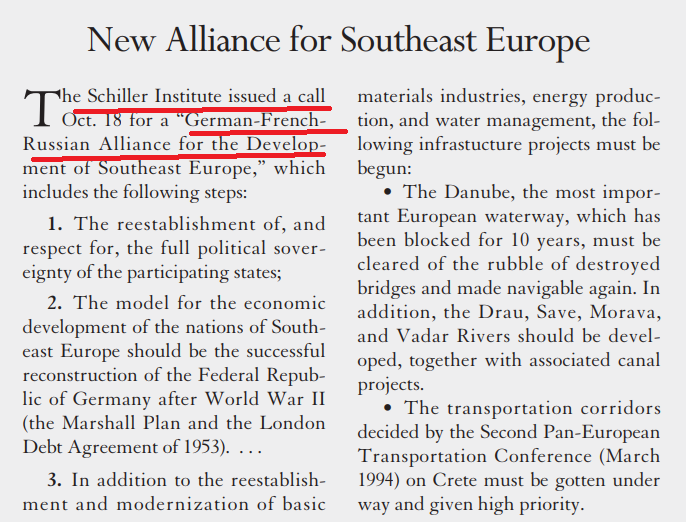
In Budapest, the LaRouches advanced a proposal for a Russia–France–Germany alliance focused on Southeastern Europe. Within this geopolitical framework, Hungary was envisioned as a central hub of interconnectivity, a concept that Orban has continued to advocate.
The widow of Lyndon LaRouche, Helga Zepp LaRouche, has regularly issued statements supportive of Orban, while her organization, the Schiller Institute, has consistently expressed backing for Orban’s government. It has portrayed him as a proponent of international dialogue and peace, particularly in the context of his alignment with Russia and China.
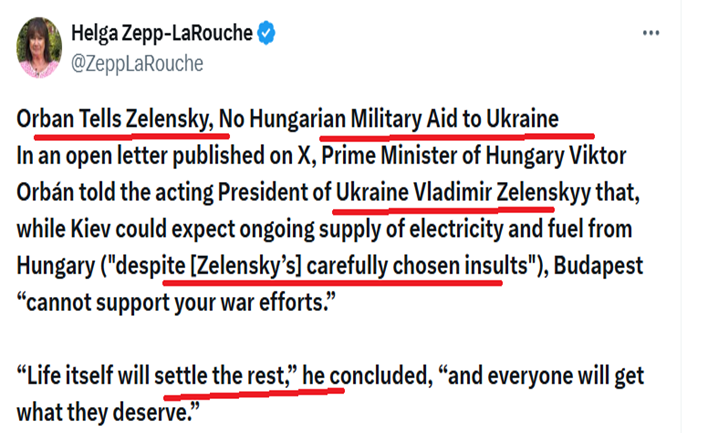
Helga Zepp LaRouche, the widow of Lyndon LaRouche, commended Viktor Orban’s role in promoting peace through his meetings with Russian President Vladimir Putin and Chinese leader Xi Jinping. She characterized Orban as a figure embodying peace, while describing NATO as a “war machine.” These remarks were delivered during a Schiller Institute webinar, an organization associated with the LaRouche movement, titled “Orban Tries Diplomacy While NATO Plans More War.”

The Schiller Institute introduced Helga Zepp LaRouche’s webinar concerning Viktor Orban, Russia, and China as follows:
“Hungarian Prime Minister Viktor Orbán used the following words to identify the principle behind the actions he has embarked upon, immediately after assuming the Presidency of the Council of the European Union, a position he will hold for the next six months. “What we can do is what it is always the job of the Presidency to do: to put proposals on the table. So we won’t be deciding, but we’ll help the twenty-seven prime ministers to decide. We’ll be there in all the places that are important for Europe, we’ll explore all the situations… This leadership isn’t bureaucratic—of course there are these dossiers and deliberations, but there also needs to be a political form of energy: an initiative which isn’t a decision, but which puts a clear description of the situation on the table, the possible solutions. This is how we’ll proceed. If in the coming days you or your viewers hear surprising news from surprising places, this is the way of working that’s behind it.”
In his first week on the job, “President” Orbán has visited Ukraine, Russia, and China. President Orbán also said something more: “In this culture of international diplomacy, what we represent and how we represent it is public, open and direct. I think that this is a virtue.” On July 8 he met with President Xi Jinping in Beijing. This was his third “surprise visit”—Kyiv, Moscow, Beijing— on his mission to create the basis for peace in Ukraine. Upon arriving in Beijing, Orbán wrote on X that “China is a key power in creating the conditions for peace in the Russia-Ukraine war. This is why I came to meet with President Xi in Beijing, just two months after his official visit to Budapest.” Xi said that an early ceasefire and a political solution were in the interests of all parties. The current focus is to abide by the three principles of “no spillover of the battlefield, no escalation of the war, and no fanning of the flames.” The international community should create conditions and provide support for the two sides to resume direct dialogue and negotiations. “Only when all major powers exert positive energy, rather than negative energy, can there be a glimmer of hope for a ceasefire in this conflict as soon as possible,” he said.
From that standpoint, look with fresh eyes on the work of China, bordered by 14 nations, and its President, Xi Jinping, in the field of diplomacy, including China’s largely-ignored plan for peace in Europe. Look with fresh eyes at the “adversary,” Russia, also bordered by 14 nations, and its President, including his June 14 proposal for negotiations. From that standpoint, look at what Orbán has moved to enact. Consider what would happen if intelligent life-forms in the trans-Atlantic sector, not necessarily in full agreement with the policies of Russia or China, but with a congruent idea of the necessity for peace through development, would think about, publicly support, and advance what Orbán has done”.
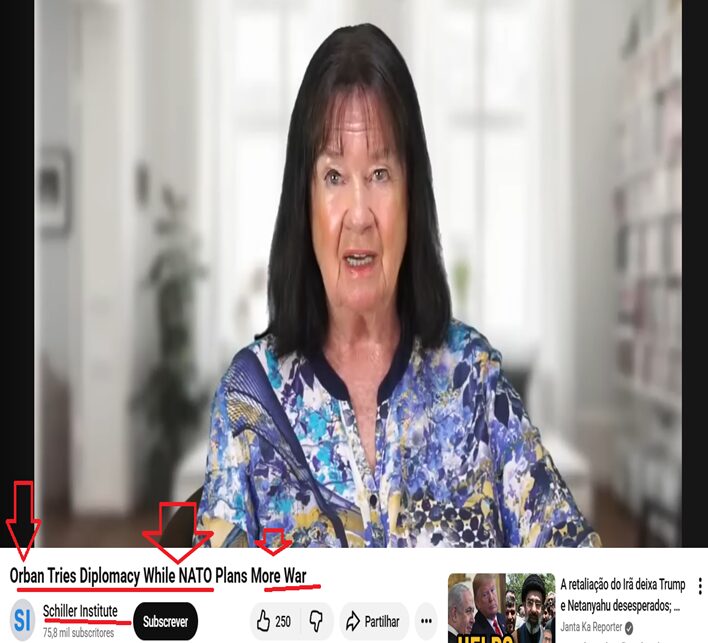
The LaRouche organization has attributed the attempted assassination of President Trump to what it characterizes as a “criminal” NATO, as well as to the British monarchy, allegedly acting in concert with Wall Street and the City of London. It has similarly advanced claims that these actors were involved in the European Union’s efforts to undermine Orban’s government. This narrative has been echoed by Alex Jones of the Russia-linked platform Infowars, and by Tucker Carlson during the inaugural edition of The Tucker Carlson Tour.
Carlson, Jones, together with Jack Posobiec, the editor of Human Events with a rumored background in allegedly high-quality training in military intelligence, announced their intention to assemble a team to investigate alleged involvement by NATO and Ukraine in the shooting of President Donald Trump.
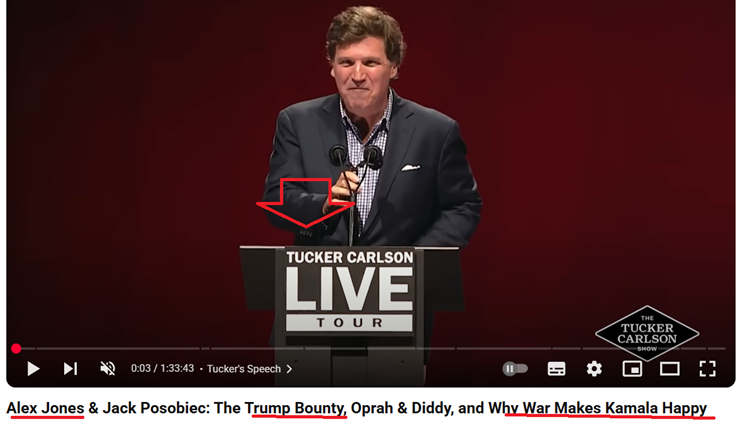
Jack Posobiec stated in a conversation with Tucker Carlson that five separate teams had been mobilized in an alleged effort to assassinate President Donald Trump, claiming they were motivated by a bounty purportedly linked to the Ukrainian government. Posobiec further indicated that he had engaged an investigative team to identify those responsible for the attack against President Trump, and that the scope of the inquiry could be extended to Ukraine if deemed necessary.
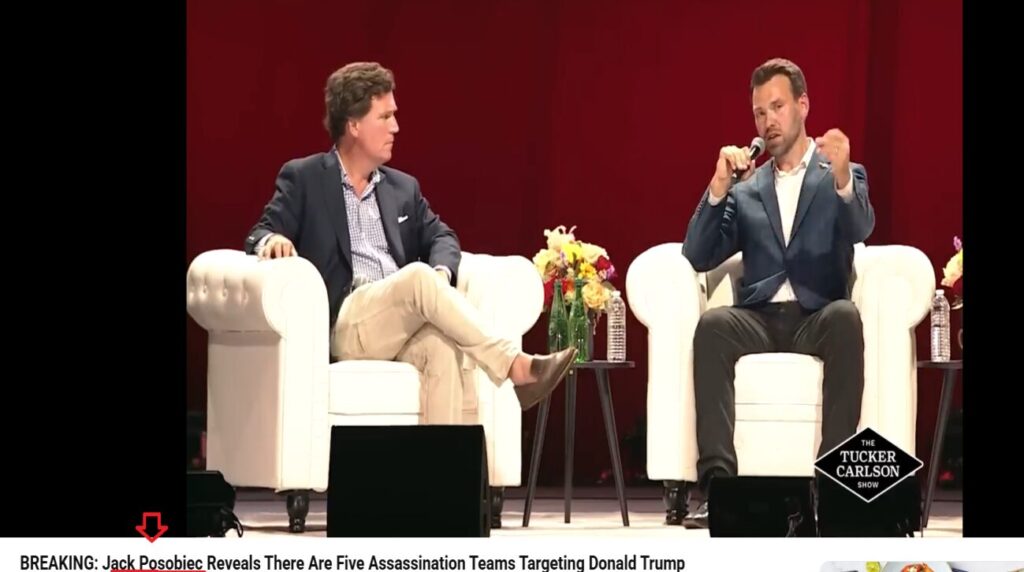
Tucker Carlson and Jack Posobiec appeared together during The Tucker Carlson Show Tour in 2024, available at: https://www.youtube.com/watch?v=wBayLDV1lXE
Jack Posobiec later published a book addressing the assassination attempt against President Trump, featuring a foreword by Donald Trump Jr. and receiving public endorsement from Roger Stone.


Tucker Carlson and Alex Jones are widely regarded as prominent public figures associated with the more intellectual output of the Claremont Institute. The influence of Carlson’s ideological stance has become increasingly pronounced and visible across multiple dimensions of American public life.
3. The Society for American Civic Renewal and the Foundationalism political philosophy: the premises of a streamlined neo-Nazi doctrine
The Claremont Institute has played a significant role in advancing these broader ideological objectives. The California-based think tank has reportedly provided support to the Society for American Civic Renewal, an organization described as holding extremist positions and expressing sympathies aligned with neo-Nazi groups in the United States and Europe. This organization promotes the concept of a civilizational renewal grounded in strong leadership and a firm commitment to family and cultural values (see, for instance, https://www.nytimes.com/2024/07/04/us/claremont-institute-trump-conservatives.html).
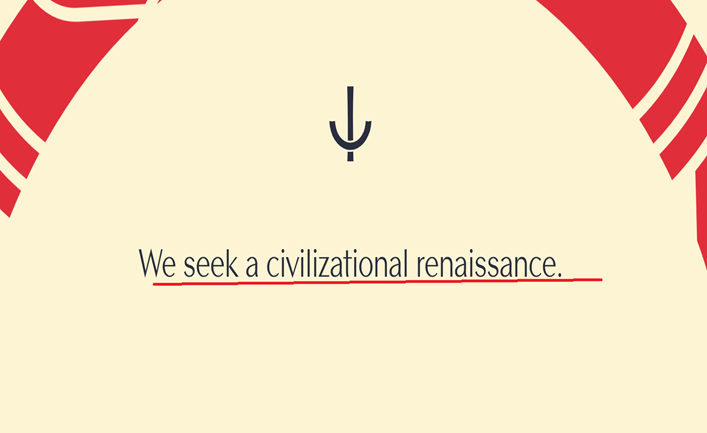
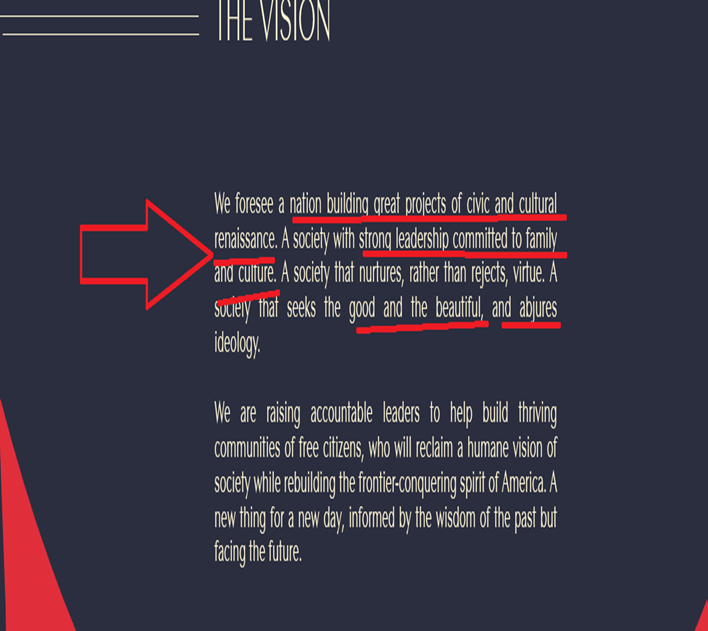
Above are the Society for American Civic Renewal’s logo and principal programmatic elements. The organization’s stated objectives suggest an effort to synthesize ideological influences associated with the John Birch Society, the LaRouche movement, and the political philosophy of Aleksandr Dugin, particularly his “Fourth Political Theory,” into a unified intellectual and practical framework aimed at acquiring political power in the United States.
This framework appears to incorporate a religious dimension, including a rejection of the secular state. At the same time, it does not fully align with conventional characterizations of “Christian nationalist” organizations, as it reflects a more complex and hybrid ideological structure (see, for example, Jason Wilson in The Guardian, https://www.theguardian.com/us-news/2024/mar/19/far-right-fraternal-order-sacr; Charles P. Pierce in Esquire, https://www.esquire.com/news-politics/politics/a60165123/society-for-american-civic-renewal-right-wing-christian-group/; Beth Daviess, “Secure a future for Christian families: The Gender Ideology and Accelerationism of the Society for American Civic Renewal,” Middlebury Institute for International Studies at Monterey, May 13, 2024, https://www.middlebury.edu/institute/ctec-publications-0/secure-future-christian-families-gender-ideology-and-accelerationism-society).
One of the principal figures associated with this invitation-only and highly selective organization is Chris Haywood. A former mergers and acquisitions lawyer, he accumulated significant wealth through his involvement with the Indiana-based cosmetics manufacturer Mansfield-King. Following the sale of the company, Haywood redirected his focus toward political activism, supporting and cultivating national-revolutionary movements within the United States, often drawing on intellectual currents from both European far-right and far-left circles. One of the guiding principles he has invoked is Vladimir Lenin’s assertion that “timing is everything.”
The Society for American Civic Renewal’s listed address is located in Carmel, Indiana, Haywood’s hometown:
Address
Society for American Civic Renewal Inc
4000 W 106th St Ste 125 PMB 203
Carmel, IN 46032
United States
This address appears to correspond to a private mailbox associated with a UPS Store, a detail that may reflect an effort to maintain a degree of organizational discretion.

The UPS Store in Carmel, Indiana corresponds to the Society for American Civic Renewal’s listed official address.
Charles Haywood is a private individual who entered the public political arena through an interview on Tucker Carlson’s show.


Charles Haywood appeared as a guest on Tucker Carlson’s show to present the principles of his foundationalist movement. During the interview, Haywood argued that the concept of the free market has become outdated and potentially destabilizing, asserting that markets should be subject to greater governmental limitation. While acknowledging that governments, including the administration led by President Joe Biden, can be deeply flawed, he proposed a more radical solution centered on a comprehensive redesign of governmental structures. In this context, Haywood expressed limited confidence in electoral processes and suggested that governments should operate with constrained objectives but expansive authority, a position that implies a rejection of traditional constitutional safeguards such as the principle of separation of powers (see: https://www.youtube.com/watch?v=Yj11A5fUNBA, approximately 19:31 to 19:54).
In addition to his involvement with the Society for American Civic Renewal, Haywood is also the principal figure behind The Worthy House, an initiative that seeks to shape the political future through a reinterpretation of the past, encapsulated in his phrase “towards a politics of future past.”
His “Foundationalist Manifesto” reflects the influence of certain traditionalist and civilizational schools of thought within the American national-revolutionary milieu, presenting a more systematized intellectual framework that builds upon strands of paleoconservative thinking associated with figures such as Pat Buchanan. Over time, these currents have intersected with elements linked to the John Birch Society and libertarian-oriented constituencies aligned with Rand Paul.
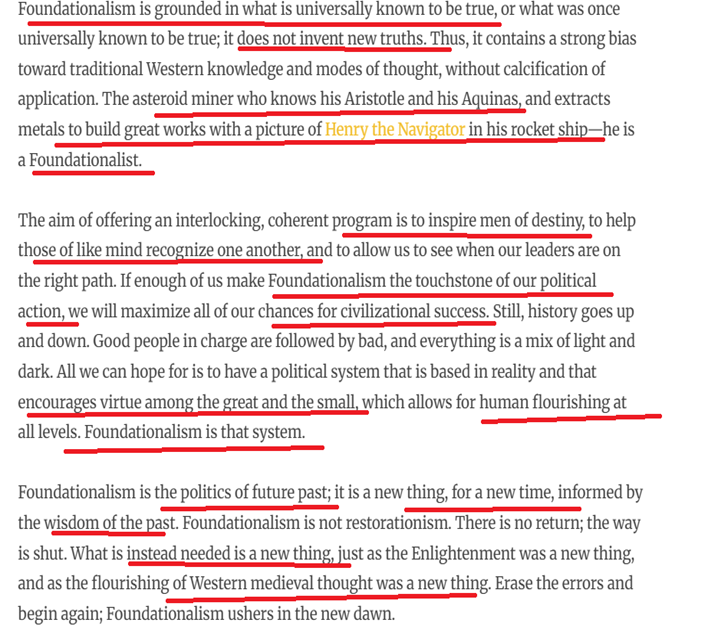
Foundationalism presents itself as a synthesis of the philosophical traditions of Aristotle and St. Thomas Aquinas, with its adherents metaphorically described as “asteroid miners” ushering in a “new dawn” for America and the broader international order. Aquinas, a central figure in natural theology, developed key ideas related to natural rights and divine law. His integration of Aristotelian philosophy with Christian doctrine later influenced thinkers such as René Guénon, and, by extension, elements within Aleksandr Dugin’s political theory.
The foundationalist movement also employs symbolic imagery and historical figures to articulate its worldview, drawing on figures imbued with both historical and mystical significance. Among these is the Portuguese Henry the Navigator, regarded as a pioneering figure of the Age of Discoveries and a symbolic reference point within certain Portuguese mystical traditions that envision the restoration of a “Fifth Empire.” This concept is framed around the idea of universal and enduring truths rooted in the Christian Catholic tradition.

In a manner comparable to Aleksandr Dugin’s intellectual reliance on René Guénon and Julius Evola, Haywood attributes many of the perceived moral and social deficiencies of contemporary society to the legacy of the Enlightenment, particularly its role in separating spirituality from rational inquiry and knowledge.
The foundationalists, militias and a new criminal law based on discrimination and public humiliation
Haywood and his foundationalist movement reject the principle of equality and instead advocate for a hierarchical social order grounded in structured forms of differentiation, an approach that reflects ideas also present in certain European national-revolutionary currents associated with Julius Evola. Within this framework, the state is envisioned as closely aligned with a particular interpretation of Catholic political organization.
The movement’s program places significant emphasis on gender-based distinctions. According to its manifesto, women would be restricted from participating in the workforce and from assuming roles considered to be inherently male. Educational institutions, under this model, would enforce gender segregation, preventing interaction between boys and girls within classrooms and school environments.
Charles Haywood’s personal background provides important context for these positions. Raised within a traditionalist Catholic environment and educated in a Calvinist setting, his views on the structure and purpose of the state appear to be shaped by a synthesis of these formative influences.
The following are Charles Haywood’s own words:
“The politics of Foundationalism will be the politics of virtue. This means that Foundationalism entirely rejects the Enlightenment. Moral systems based on supposed emancipation, the search for equality, emotivism, and similar grounds will vanish. All mention and memory of John Rawls will be erased”.
“The incoherence of the modern philosophers will be replaced with the older and proven teleological conception of man, as filtered through Christianity. The government will seek to encourage virtue in the populace, but the populace, and in particular the ruling class, is the necessary repository and driver of virtue, if virtue is to permeate a society. The aim will be for society to seek the good, which is already known, though its application to new circumstances and happenings may require discernment”.
Haywood, for his part, has revived the concept of “social humiliation” and “reward” as central mechanisms for promoting what he defines as virtue within society. He advances an “organic” understanding of virtue, one rooted in the preservation of customs, shared moral norms, and long-standing traditions, which, in his view, should be upheld and reinforced through state authority.
Within this framework, the enforcement of these norms is not conceived as resting solely with formal state institutions. Haywood acknowledges the practical limitations of continuous state enforcement and instead envisions a broader system in which members of the community, militias, and intermediary social structures assume an active role in maintaining and imposing these standards. In this conception, social pressure, including public censure and other forms of coercion, becomes a key instrument in sustaining the desired moral order.
This model reflects a perspective in which legal protections against stigma or social exclusion are limited, particularly when such dynamics are perceived to reinforce prevailing communal values or hierarchical structures. Under such a system, individuals who fundamentally dissent from the established order may face strong pressure to conform or, alternatively, to relocate elsewhere.
In this view, the state’s role extends beyond formal governance into the active defense and cultivation of a particular cultural and moral framework. The following are Charles Haywood’s own words:
“Virtue will be strengthened with rigorous application of social stigma and taboo, tied in part to religion, but not wholly dependent on religion. No laws will protect any person from the effects of desirable stigmas and taboos; quite the contrary. Emigration will be encouraged by any person who finds this unpleasant. Conversely, honors will be awarded the deserving—those who accomplish and those who hew to the virtues demanded by the Foundationalist society.Yet Foundationalism will not seek to attain perfect virtue among the populace. The Foundationalist government grasps that, humans being who they are, some limited amount of vice is inevitable, especially among the lower orders of society. The intent will be to dampen and limit vice, through approbation of virtue and stigma of vice, coupled with legal penalties for vice where appropriate. Culture and law will work hand in hand to maximize, not perfect, virtue”. For all quotations attributed to Haywood, the Foundationalist Manifesto should be consulted: https://theworthyhouse.com/2021/06/17/the-foundationalist-manifesto-the-politics-of-future-past/
4. Foundationalists: Haywood and his concept of collectivist-statist capitalism and social hierarchy
What about economics?
What does foundationalism say about economic organization?
Once again, the movement reveals its authoritarian orientation by advocating the subordination of economics to politics. Private property would formally be respected, but only insofar as it remained subject to the “public virtues” defined by the political will of society. The “free market” would be permitted only to the extent that it did not conflict with the common interest or with politically defined virtues.
This position echoes the Roman law doctrine of the “social function of private property,” later adopted and developed by both socialist and fascist systems, including legal theorists associated with Mussolini’s regime. It also remains influential within parts of “social Europe.”
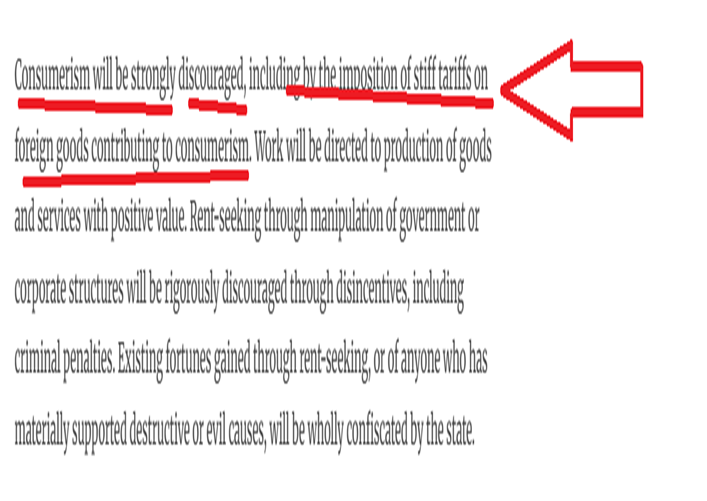
Free markets would be replaced by a communitarian economic model, including the use of tariffs on imports in order to reduce consumerism. Foundationalists envision a society that may be materially poorer but, in their view, more cohesive and fulfilled, with its principal wealth located in history, tradition, and inherited culture. In practice, this would mean the end of genuinely free markets, replaced by markets aligned with the political forces controlling the government at any given moment.
In effect, foundationalists seek to Europeanize the United States, or more precisely, to “Hungarize” it, in a manner so radical that it recalls pre-World War II Europe. Contrary to Haywood’s claims, there is no meaningful precedent in American history, nor in the legacy of the Founding Fathers, for the social model that foundationalists seek to impose on the United States.
It is therefore, to borrow Bertrand Russell’s phrase, intellectual rubbish to claim that foundationalism seeks to “restore America’s greatness” on the basis of American traditions and history. Perhaps this vision reflects the America that Haywood’s European, ultra-Catholic teachers imagined had once existed. It does not reflect the actual historical experience of the United States.
Chris Haywood, who refers to himself in the Foundationalist Manifesto as the “maximum leader,” could not be more explicit:
“The Fifth Pillar: The Subordination of Economics to Politics”
“Foundationalism honors private property as the basis of a free society, and assumes that most free exchanges are to be unfettered by any government intrusion. Foundationalism is not Distributism, but it knows that concentrations of economic power are inherently corrosive and to be prevented by, and if necessary shattered by, direct government action. In no circumstance will a conflict between virtue and the free market be resolved in favor of the latter. In all instances, political choice will dictate the limits of economic choice.
The specifics of our economic system are not a major concern of Foundationalism. Certainly, any economic action based on unreality or on ideology will be rejected, and the fake “work” that currently makes up much of our economy will be eliminated, but whether we need a gold standard, what is to be the fractional banking ratio, and under what circumstances government may be useful to jog economic activity are strictly practical concerns, to be addressed as necessary, not as a matter of abstract principle. Central planning will be regarded with great suspicion, however, as tending not only to not be effective, but, much more important, to grow government and to cause it to interfere in matters not of its concern.
Consumerism will be strongly discouraged, including by the imposition of stiff tariffs on foreign goods contributing to consumerism. Work will be directed to production of goods and services with positive value. Rent-seeking through manipulation of government or corporate structures will be rigorously discouraged through disincentives, including criminal penalties. Existing fortunes gained through rent-seeking, or of anyone who has materially supported destructive or evil causes, will be wholly confiscated by the state”.
Charles Haywood went on to emphasize the importance of hierarchy and order, drawing on the ideas of Julius Evola and the German thinker Carl Schmitt. He has stated without qualification that foundationalism is an elitist movement directed toward the broader population, characterizing it as a vanguardist project. This concept reflects a tradition found in various national-revolutionary movements, including those associated with Lenin’s communist framework and Hitler’s regime. Within this vision, the state would be structured in accordance with a hierarchical model inspired by the Catholic Church.
The following are the maximum leader’s own words:
“The Eighth Pillar: Hierarchy and Order
Foundationalism recognizes that in all areas of life, hierarchies are both natural and desirable. In no instance will a hierarchy be seen as undesirable oppression. Foundationalism is a movement with an elite, but not for the elites.
The Foundationalist society will be one of order, but not because it is a police state. Quite the contrary; order will result from a combination of the political structures and the reborn virtue of the populace. If enforcement must be widespread, the society, or at least a part of the society, is failing.
Crimes will be limited to crimes that are malum in se. No malum prohibitum crime will exist, although civil penalties, fines and debilities, will be implemented for violation of what few regulations exist. Capital punishment will be imposed for major crimes and will be swiftly implemented. For non-capital crimes, corporal punishment will be the default, rather than imprisonment.“
Christianity, understood in the Calvinist tradition in which Haywood was educated, would be established as the official religion of the state. Other religions would be permitted only insofar as they do not conflict with this designated “official religion of virtue.” Within this framework, the state would actively promote preferential treatment for Christians across multiple spheres of society, including within the labor market.
The following are the maximum leader’s own words:
“The Ninth Pillar: Christian Religion
Foundationalism does not offer an ideology; transcendence is not offered through the state. But every sound society must have an impeller to virtue and to achievement, and a mechanism for transcendence. Religion, though itself an ideology of sorts, can be one of those impellers. Achieving virtue in the people, both the ruling classes and the masses, though especially the former, along with driving accomplishments that will echo down the ages of Man, are among the ends of Foundationalism, and right religion is a key component of both.
Only one religion, Christianity, has ever been associated with success in both areas—and it is true, which is a bonus. Therefore, Christianity will be the officially-favored religion of the Foundationalist state, replacing the great heresy of Modernism, our currently officially-favored religion.
The state’s overarching goal in favoring Christianity will be to seek the common good and a realistic amount of virtue and flourishing. The society’s standards of virtue will not emerge from a purely confessional basis, but most of those standards will be derived from Christianity. Christianity will be explicitly preferred, in part, because on average Christian belief leads to the best outcomes for the state and society. For example, teachers in any state-supported lower school or high school will be required to be practicing Christians (just as now they are effectively required to be practitioners of globohomo), and Christians will, all else being equal, receive state preferment, as well as, no doubt, preferment in the private sphere, from jobs to social status.
Personal advancement in the state and society would thus certainly benefit from conversion to Christianity. It might be objected that the result will often be Christians in name only, but that’s fine—the goal is to weld together a society, and most of all a ruling class, and while there will always be variability of belief, over time a strongly dominant religion will do the welding, and that welding will lead to an increase in devout belief, in a virtuous circle.
But the Foundationalist state is not a policer of the practice of belief. Rather, it will encourage and incentivize moral behavior, with punishments when necessary, not of disbelief, but of actions that corrupt virtue. Thus, it will forbid most divorce, not because it is a sin, but because it destroys society. It will frown on adultery and homosexual acts, and disincentivize both, but not criminalize either. It will punish graft, theft, and sharp practice; the unfettered free market will no longer be thought of as some special good or moral in itself. Gambling will be mostly illegal; there will be no lotteries. The state will corral and curb prostitution; it will flog pornographers; and it will execute abortionists and other murderers. And so forth, in organic development that will depend on what can be accomplished at any given point while maintaining a proper balance of cost and benefits.
At the same time, freedom of religious exercise for all will be allowed to the extent not actually in contradiction with virtue. Thus, any non-pernicious religion, any religion that is not a proxy or bridgehead of external enemies of state or society, will be permitted freedom of worship, without any attempt to make worship difficult (such as Islam has always imposed on Christianity in the lands it has temporarily conquered). Paganism and polytheism will be allowed, and even preferred to the extent that virtue is their focus. Naturally, wholly pernicious belief systems, such as Satanism, will be directly suppressed. Open atheism will be strongly discouraged and socially anathema”.
5. Foundationalism and the Jewish question
With respect to what is described as the “Jewish question,” the Foundationalist Manifesto engages with themes historically associated with antisemitic discourse, while framing its position in more indirect terms. It characterizes the Jewish people as a distinct group that maintains separation from the broader population, suggesting that such differentiation may give rise to social tensions.
Within this context, Charles Haywood’s critique is directed in part at organizations such as the Anti-Defamation League. His argument presents Jewish identity as being shaped by a perception of structural victimhood and persistent grievance, which he associates with a tendency to align with left-leaning political movements. He further contends that this dynamic contributes to discomfort among right-leaning groups, whom he portrays as viewing such attitudes as incompatible with broader national cohesion.
In this framework, acceptance is framed as contingent upon opposition to individuals and organizations that Haywood criticizes, including figures such as Jason Greenblatt and others associated with the Anti-Defamation League.
The following are the maximum leader, Charles Haywood’s, own words:
“The Jews” is not an explanatory device for history; that Jews are an ethnocultural group of great importance is part of the mix, to be sure, but neither determinative nor something that requires or deserves obsessive focus. (Although, it also doesn’t deserve none, which is what it gets for the most part.) But denying there is a “Jewish Question” is not the same thing as denying the Jews are a people apart—they most definitely are. What does that mean for America?
It’s not just America, but every society, where Jews are a people apart. This has always been true, and it’s why there are Jews today at all. As Hilaire Belloc said, “Did you ever see a Hittite walking down Main Street?” Jews have maintained a unique culture through thousands of years, which is an impressive accomplishment. Of course, being a people apart means that conflicts necessarily arise with the rest of whatever society Jews live in. These are exacerbated by that Jews are smarter and in many ways better than most people in most societies, and clannish, prioritizing other clan members, so they are almost always disproportionately successful wherever they are.
For any such group to survive over time, it can never be fully absorbed into any society in which they live. This leads often, or always, to friction within the society, just as, say, Chinese success in Malaysia does (or for that matter Asian success in America), but to a greater degree, with resentments breeding on both sides. In more than one Western society, Jews have come to dominate elite professions to a degree that is societally corrosive. Moreover, as Paul Johnson points out in his A History of the Jews, the Jews, or some Jews, simply can’t help being resentful and coming into conflict with the rest of their society, something he ascribes, in part, to the culture of Jews, not just to competency-related structural factors.
That said, I just don’t think that Jews as Jews have some unduly malign influence on American, or European, politics. Certainly, individual Jews are extremely destructive (e.g., George Soros), and their being Jewish is not incidental. But there is no conspiracy of Jews; there is a conspiracy of the Left, that some Jews have joined. It’s a close call who is more destructive—Soros, or the Koch Brothers.
Jews have certainly been over-represented in every Western destructive left-wing movement, because resentful Jews are attracted to them. And many Right movements exclude those seen as alien to the society, fairly or not. This is a tactical problem, in that it means a Right movement can appear to be in conflict with Jews more generally, even if that is not necessarily the case. But that a minority that sometimes feels itself outsiders joins destructive movements doesn’t mean that they created those; certainly, Jews did not create the Enlightenment, which is the root cause of our civilization’s discontents. If the Jews had disappeared in A.D. 74, our civilization would likely be in very much the same place we are now.
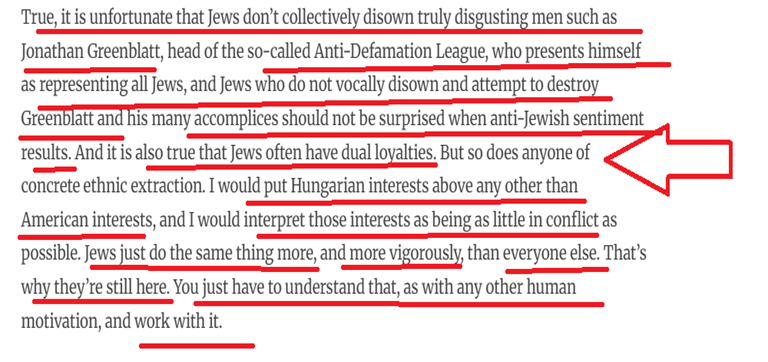
True, it is unfortunate that Jews don’t collectively disown truly disgusting men such as Jonathan Greenblatt, head of the so-called Anti-Defamation League, who presents himself as representing all Jews, and Jews who do not vocally disown and attempt to destroy Greenblatt and his many accomplices should not be surprised when anti-Jewish sentiment results.
And it is also true that Jews often have dual loyalties. But so does anyone of concrete ethnic extraction. I would put Hungarian interests above any other than American interests, and I would interpret those interests as being as little in conflict as possible. Jews just do the same thing more, and more vigorously, than everyone else. That’s why they’re still here. You just have to understand that, as with any other human motivation, and work with it”.
Charles Haywood’s perspective on the so-called “Jewish question,” as he frames it, has direct implications for both his and the foundationalists’ broader positions on immigration and American foreign policy. In particular, it informs a preference for a strictly isolationist approach, encapsulated in the slogan “nationalism, not globalism.”
6. Foundationalism and foreign policy: nationalist isolationism
The foundationalism movement’s maximum leader, Haywood, outlines this approach as follows:
“The Twelfth Pillar: Nationalism, Not Globalism
“Foundationalism will be the spine of the nation, and that nation will stand apart from other nations, with no interests in other nations beyond trade in useful articles and a decent mutual respect for each other’s interests, combined with willingness to defend those interests if threatened. Immigration will only be permitted in extremely limited amounts, and only of culturally-compatible individuals with specific worthwhile skills. All illegal immigrants and legal immigrants of the past several decades not culturally compatible will be deported to their countries of origin.
In foreign policy the only relevant criterion will be the ends of the nation (although since Foundationalism will explicitly prefer Christianity, the interests of Christians as Christians outside the country, and to some extent also of Jews if also in the benefit of Christians, will be considered an interest of the nation). The Foundationalist state will implement an aggressive industrial policy tailored to benefit the populace, meaning workers, not a parasitic elite. In short, globalism in its current meaning will be despised and treated with contempt.
Dual citizenship will not be permitted. Any citizen who views himself as a global citizen, not a citizen of the nation, will be made to leave while his assets stay behind”
Haywood therefore advances a far-reaching form of isolationism which his supporters and associates at the Claremont Institute present as grounded in the doctrine of President Thomas Jefferson, and as uniquely compatible with the United States Constitution. Within this framework, the United States would refrain from identifying or pursuing adversaries abroad, emphasizing instead a principle of mutual respect among nations and non-interference in domestic affairs, a position that contrasts with perspectives historically associated with figures such as James Madison.
Under this model, American engagement in international affairs would be narrowly confined to the protection of trade relations. Immigration would be largely restricted as a matter of principle, with limited exceptions for highly skilled or affluent individuals whose presence is viewed as beneficial to the state’s strategic objectives. Dual citizenship would be prohibited on the grounds that allegiance cannot be divided.
Those unwilling to conform to the system’s expectations would, in this vision, face removal from the country and potential loss of property. The framework further envisions a process of systemic transformation aimed at reshaping society at a fundamental level. Haywood has described an initial phase focused on undermining confidence in existing institutions and weakening what he characterizes as excessive individualism.
Within this broader conception, shaping public opinion is regarded as a central component of political transformation, with influence expected to develop from the societal level upward, while preserving the authority and continuity of a leading elite aligned with the foundationalist project.
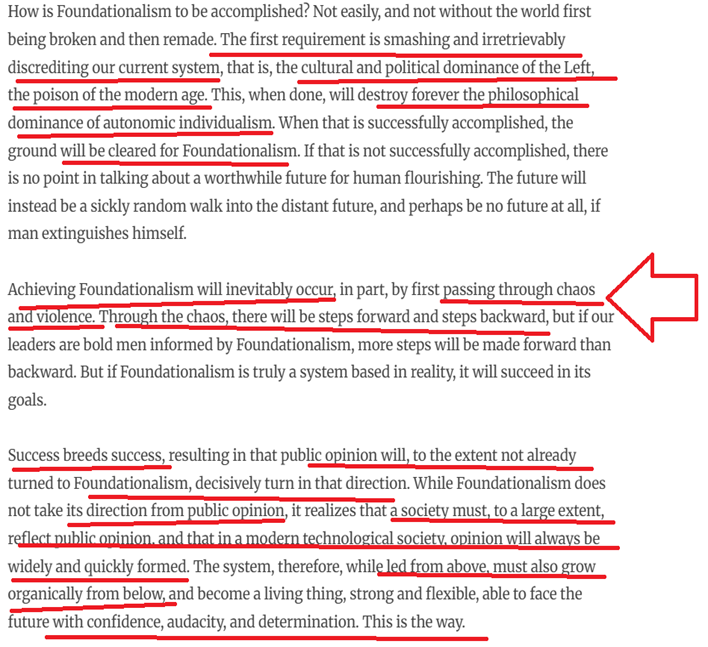
It is arguable that the foundationalist manifesto reflects elements comparable to the policies associated with Viktor Orban, appearing, in this interpretation, as a synthesis of his governing approach with aspects of Aleksandr Dugin’s theoretical framework. References to Putin’s Russia and Communist China are also presented as points of influence on Charles Haywood, particularly in relation to the more centralized and authoritative dimensions of his political vision.
In addition to his religious and educational background shaped by Catholic and Calvinist traditions, Haywood’s familial environment is also presented as a formative influence. His father, Richard Mowbray Haywood, served as a professor of history at Purdue University in Indiana, where he specialized in the study of Russian and Eastern European statecraft across the Tsarist, Soviet, and post-Soviet periods.
Richard Haywood married Piroska Molnár, a Hungarian national, and developed a strong interest in Hungarian history and culture. His academic career involved extensive travel to Eastern Europe and Russia. He was awarded a Ford Foundation scholarship, with partial support from the U.S. State Department, aimed at fostering cultural and academic exchange between the United States and the Soviet Union. This support enabled his research residency in Moscow, where he conducted work on the development of the railway system in Tsarist Russia.
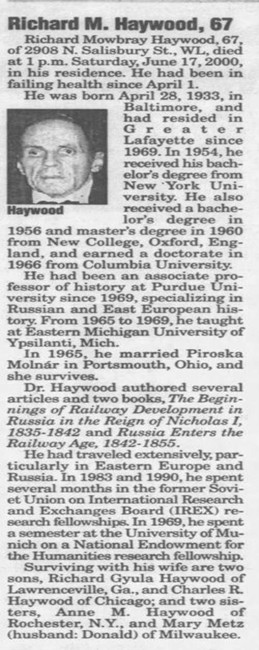
Richard Mowbray Haywood went on to publish two influential scholarly works, Russia Enters the Railway Age, 1842–1855 and The Beginnings of Railway Development in Russia in the Reign of Nicholas I, 1835–1842, issued by Duke University Press in Durham, North Carolina, in 1969. These studies are later cited as having informed the thinking of Vladimir Yakunin, a former KGB officer who, as chairman of Russian Railways (RZD) under Putin, advanced ambitious plans to modernize and expand the railway system as part of a broader vision of Eurasian integration extending from Lisbon to Vladivostok.
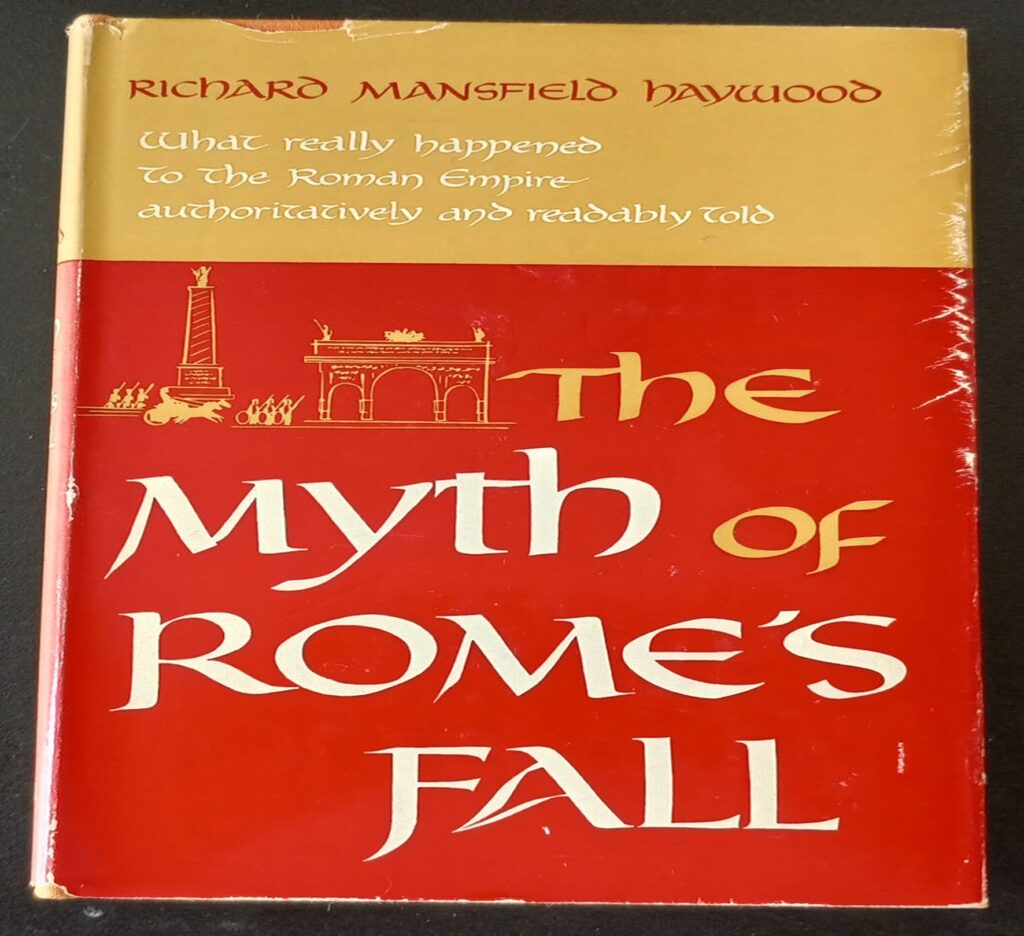
Charles Haywood’s grandfather, Richard Mansfield Haywood, was also a prominent American academic, recognized for his work as a classicist and as a professor at Johns Hopkins University and New York University. His research focused on Greek and Roman civilization, and he is particularly known for his book The Myth of Rome’s Fall.
In this work, Richard Mansfield Haywood presents a reinterpretation of the decline of the Roman Empire, arguing against explanations centered on external pressures. Instead, he attributes Rome’s collapse to internal dynamics, including complacency, excessive ambition, corruption, and the conduct of a self-serving elite.
Several decades later, his grandson, Charles Haywood, would apply similar analytical criteria to assess and forecast the trajectory of what he describes as the “American empire.” In his view, the United States in the post–World War II era has, through its global posture, contributed to the weakening of the “American nation,” arguing that national priorities have shifted away from the interests of the American people.
Within this framework, Haywood advocates a return to what he interprets as the foundational conditions of 1776. This includes a renewed emphasis on local community and family as the central organizing units of society. His perspective also entails a reconfiguration of the relationship between church and state, challenging the long-standing constitutional principle of separation established with the ratification of the First Amendment. In this model, religious pluralism would be permitted only insofar as it does not conflict with a dominant Christian framework.
Governance, in this conception, would be centered on a strong executive authority, drawing inspiration from classical figures such as Augustus. Democratic processes would be significantly curtailed, with representation reimagined through a system in which authority is concentrated in a central leadership supported by a select governing elite. Institutional representation would shift away from individuals toward organized professional, economic, and social bodies, reflecting a corporatist structure with primarily consultative functions.
In the realm of foreign policy, Haywood envisions a markedly restrained international role for the United States, limited primarily to the defense of its trade interests. This approach is framed as analogous to the early Roman Republic, which he regards as a model for a more focused and internally cohesive national strategy.
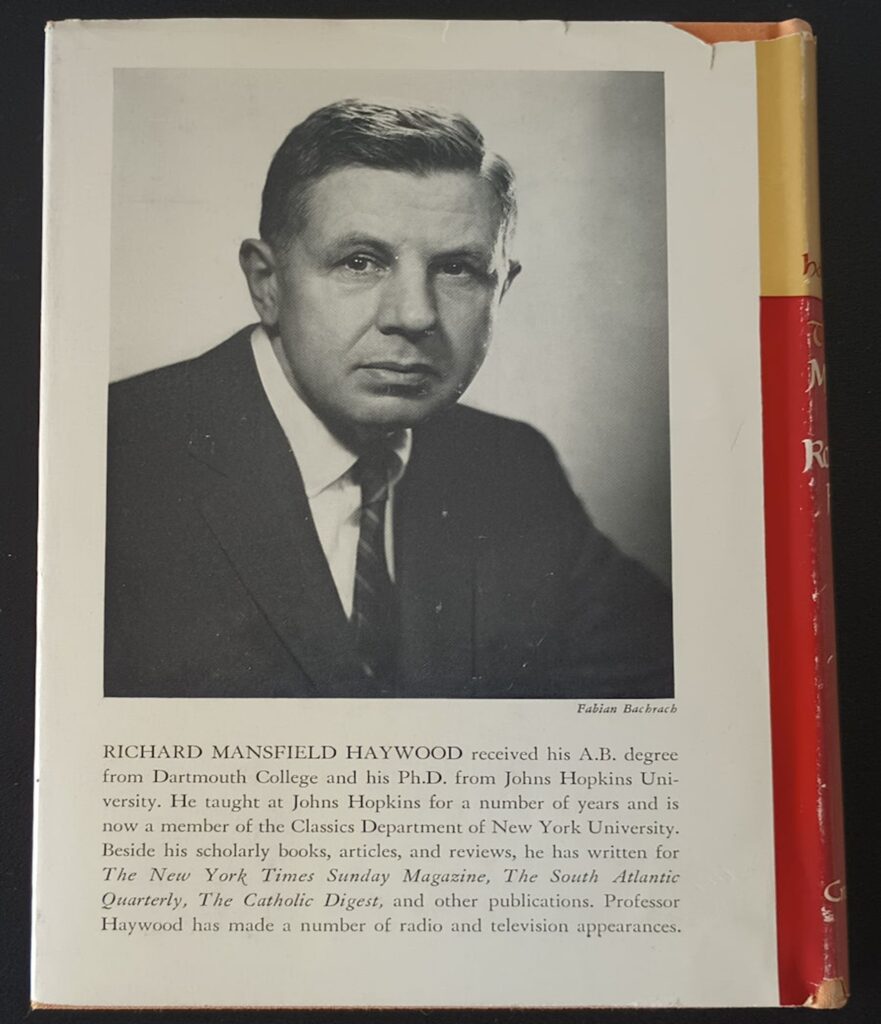
Richard Mansfield Haywood, the grandfather of Charles Haywood, referred to by the latter as the “maximum leader.”
Charles Haywood has expressed alignment with the perspective, associated with certain European national-revolutionary currents, that intellectuals alone are not the primary drivers of revolutionary change. In this context, he has acknowledged admiration for figures such as General Francisco Franco of Spain and Portugal’s António de Oliveira Salazar.
In a discussion with Christopher F. Rufo, Haywood argued that conservative movements should avoid internal divisions on the right, emphasizing instead a unified focus on opposing the left and prevailing in what he characterizes as a broader cultural struggle. Within this framing, even highly centralized or authoritarian leadership models are at times described as instrumental in achieving these objectives, including against groups they associate with a broadly defined “left,” which they may extend to include neoconservative elements.
Although this discourse often adopts conventional political terminology such as “left” and “right” in electoral contexts, Haywood and his associates have indicated a preference for moving beyond this dichotomy in favor of a redefined political vocabulary, sometimes described as metapolitical in orientation and influenced by frameworks associated with Aleksandr Dugin.
The Society for American Civic Renewal is presented by Haywood as an organizational vehicle intended to translate these ideas into practice. He has described his role in terms that emphasize leadership and mobilization in defense of what he defines as national interests, including, in some interpretations, consideration of significant structural changes to the United States system, such as decentralization or challenges to federal authority.
Haywood has also characterized the Society for American Civic Renewal as a form of brotherhood, grounded in shared beliefs and cohesive leadership. Its stated purpose is to advance a transformation of American society oriented around what are described as enduring or traditional values, with an emphasis on reshaping political structures and institutions in line with this vision.
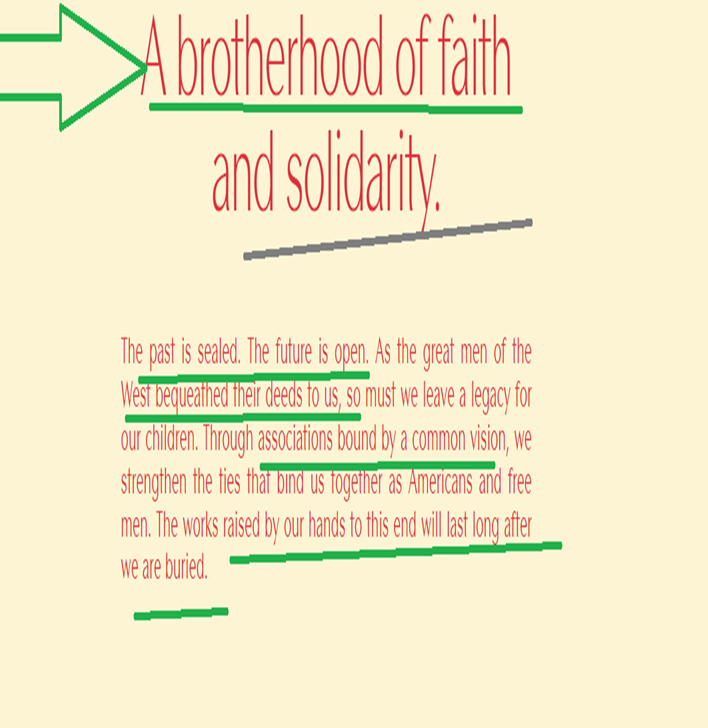
The Society for American Civic Renewal incorporates the central tenets of Haywood’s Foundationalist Manifesto, including the emphasis on a unified national project such as space exploration, the defense of what are described as enduring societal virtues, and the premise that individual flourishing is inseparable from the well-being of the broader community.
It is also noteworthy that the organization refers to its political doctrine as “civilizationism,” a term that has been used in other geopolitical contexts to describe projects aimed at advancing a multipolar world order, including those associated with countries such as Turkey and Qatar, and with the Muslim Brotherhood movement.

7. The Worthy House, Viktor Orban, and the Society for American Civic Renewal’s influence on the Claremont Institute and the Trump 2.0 administration
Another member of the Society for American Civic Renewal is Ryan P. Williams, the president of the Claremont Institute. He also serves as publisher of the Claremont Review of Books and The American Mind.
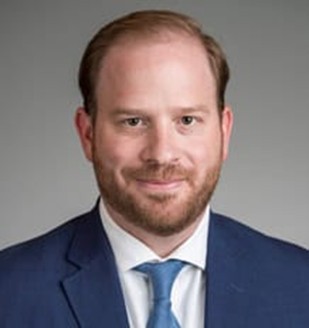
Ryan P. Williams
Williams is regarded as a protégé of Michael Anton, a senior fellow at the Claremont Institute and a professor at Hillsdale College.
The writings of Anton and Ryan P. Williams have been cited as influential in shaping President Donald Trump’s executive order on birthright citizenship (Executive Order 14160, signed on January 20 during President Trump’s second-term inauguration).
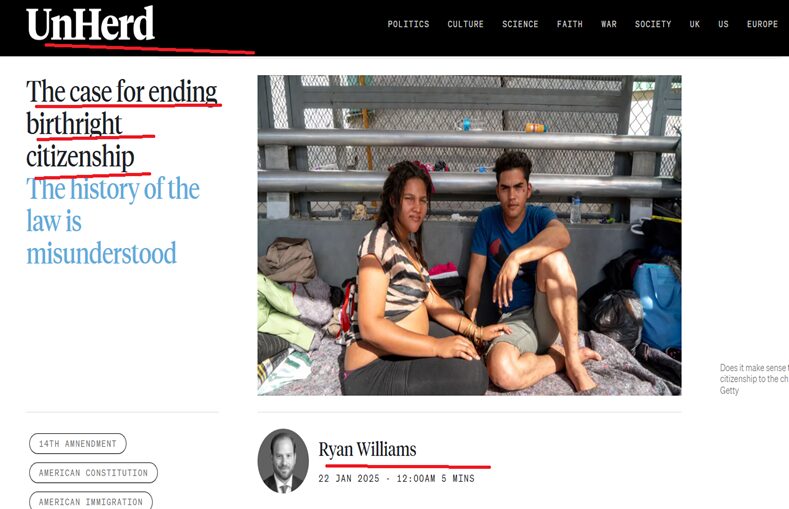
His provocative style has at times been described as appealing to more radical segments of the American political spectrum, including efforts to draw fringe elements toward the broader MAGA movement.
A frequently cited example followed the publication by The New Republic of an image portraying President Donald Trump in a manner suggestive of Adolf Hitler. In response, the director of the Claremont Institute and member of the Society for American Civic Renewal issued a brief and ambiguous remark, stating that “ideas have consequences.”
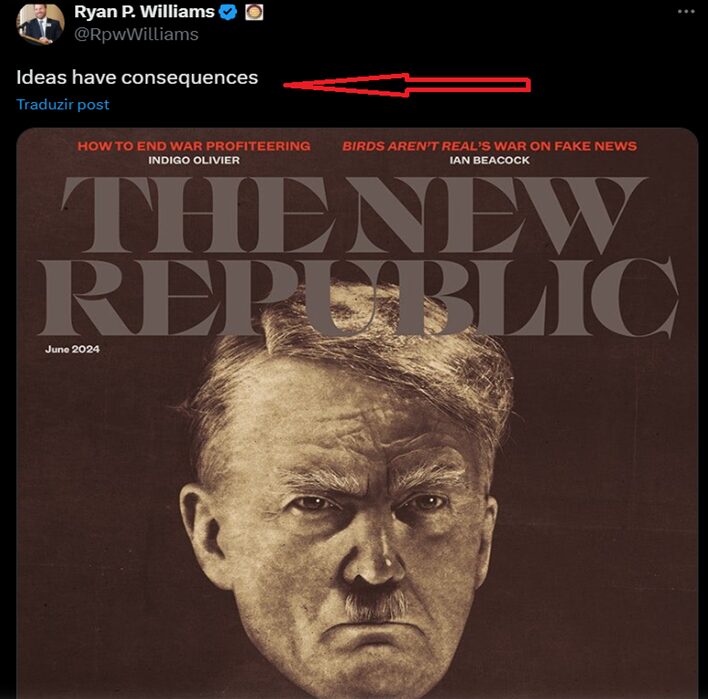
From this perspective, Ryan P. Williams is seen as seeking to engage segments of the American electorate situated at the ideological margins, including groups that have expressed sympathy for extremist doctrines. This interpretation aligns with the broader strategic outlook attributed to Charles Haywood and Christopher Rufo, which emphasizes coalition-building across otherwise divergent factions in pursuit of shared political objectives.
Within this framework, the potential role of highly centralized or authoritarian leadership is at times presented as instrumental in achieving political transformation. The rhetoric associated with these positions has also been interpreted as contributing to an atmosphere of heightened polarization, particularly in its portrayal of media institutions and political opponents.
Ryan P. Williams previously served on the board of the Society for American Civic Renewal, where he worked in proximity to Charles Haywood. The organization has also been reported to have received financial support from the Claremont Institute, under Williams’s leadership.
Endnote: Jason Wilson, “Revealed: US conservative thinktank’s links to extremist fraternal order,” The Guardian, March 11, 2024; “Why a New Conservative Brain Trust is Reshaping Across America,” The New York Times, July 4, 2024; Travis Gettys, “Right-wing think tank chief defends ties to wannabe warlord’s extremist group,” Raw Story, March 11, 2024.
Conclusion
This analysis presents the argument that the political model associated with Viktor Orban has exerted a notable degree of influence on certain strands of discourse within the United States. It further contends that a number of groups characterized as extremist have gained visibility during the Trump 2.0 administration, in some cases through connections to institutions such as the Claremont Institute. According to this interpretation, the broader objective of these networks is to reshape the American political, social, religious, and cultural landscape in ways that reflect elements of Hungary’s contemporary governance model.
The argument also situates these developments within a wider geopolitical context, suggesting alignment with narratives and frameworks associated with Russia. In this view, the transformation of American political structures would contribute to a reconfiguration of the international order, bringing the United States into closer ideological proximity with systems influenced by Russian statecraft and related intellectual traditions.
This analysis presents the argument that the political model associated with Viktor Orban has exerted a notable degree of influence on certain strands of discourse within the United States. It further contends that a number of groups characterized as extremist have gained visibility during the Trump 2.0 administration, in some cases through connections to institutions such as the Claremont Institute. According to this interpretation, the broader objective of these networks is to reshape the American political, social, religious, and cultural landscape in ways that reflect elements of Hungary’s contemporary governance model.
The argument also situates these developments within a wider geopolitical context, suggesting alignment with narratives and frameworks associated with Russia. In this view, the transformation of American political structures would contribute to a reconfiguration of the international order, bringing the United States into closer ideological proximity with systems influenced by Russian statecraft and related intellectual traditions.
For the first time, this article assembles and systematizes the philosophical and ideological underpinnings linking these developments, bringing together arguments for an expansive and restrictive approach to immigration policy, including proposals such as the limitation or abolition of birthright citizenship. It traces the intellectual and political connections among Viktor Orban, the LaRouche movement, Tucker Carlson, Jack Posobiec, and a network of influential ideologues associated with the Trump 2.0 administration, particularly in its second term, presenting them as part of a broader and interrelated ideological framework.

No responses yet